he use of processed animal proteins (PAPs) derived from insects in animal feed poses a challenge for official controls in Europe, particularly because they remain prohibited for ruminants and because it is impossible to identify the authorised insect species.
The official detection method for these species currently relies on observation by light microscopy, a method that depends on the analyst's expertise and has two major limitations: a risk of misidentifying certain authorized observed structures with real insect fragments, as well as a wide variety of particles resulting from the grinding of the larvae, which makes identification difficult.
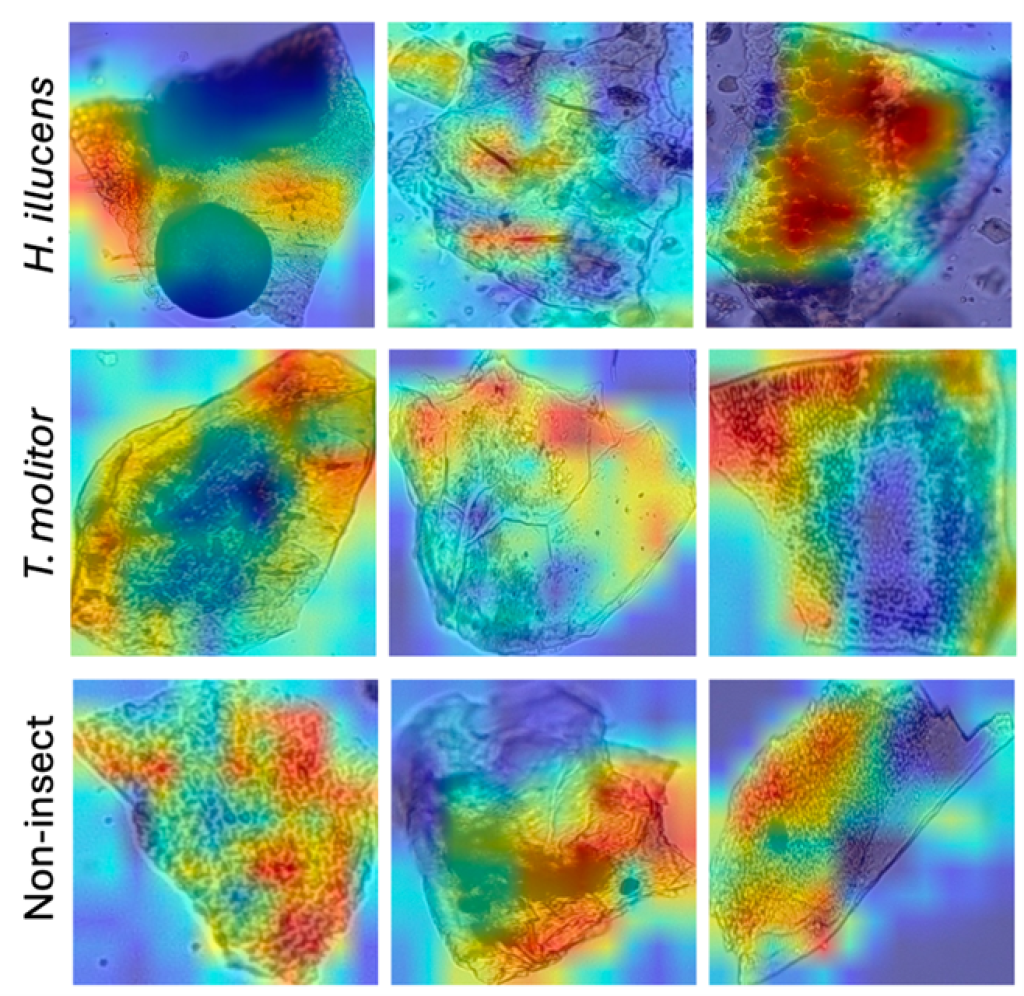
To address these challenges, the CRA-W and UMons have developed an artificial intelligence (AI) system capable of automatically analysing micrographs using deep learning techniques. The solution combines an object detection model, an advanced classification architecture, and "transformer"-type mechanisms.
The results obtained are beyond expectations. The model effectively distinguishes insect particles from other ingredients and even identifies the species of PAPs, including the mealworm and the black soldier fly — a distinction that is known to be difficult. Performance exceeds 95% accuracy, demonstrating the reliability of ingredient classifications.
When connected to a digital microscope, the system can even be used in real time — a first in this field. Each prediction is accompanied by a confidence index that makes it easier to interpret the results.
This innovation opens new possibilities in the field by providing a powerful decision-support tool that is extremely useful for analysing complex samples. Presented at the Feed2025 conference in Serbia, this work was also the subject of an open-access scientific publication (https://doi.org/10.1016/j.crfs.2026.101374). This research will be followed by a doctoral thesis undertaken by Cyril Kaisin in collaboration with the Polytechnic Faculty of UMons, with the aim of extending this approach to other feed related identification problems in microscopy.