PROFEED launches to advance Europe’s protein autonomy through sustainable feed solutions
The project
The new Horizon Europe project will develop sustainable locally sourced plant protein alternatives, regional roadmaps and EU-level policy recommendations to reduce Europe’s dependence on imported protein sources for animal feed. Led by the University of Leeds, PROFEED brings together 15 partners from 8 European countries to connect crop science, farmers, feed technology, animal nutrition and policymaking across the entire value chain.
With nearly €5.5 million in Horizon Europe funding, PROFEED will run from October 2026 to September 2030, supporting Europe’s transition towards more autonomous, sustainable and resilient feed systems.
The launch
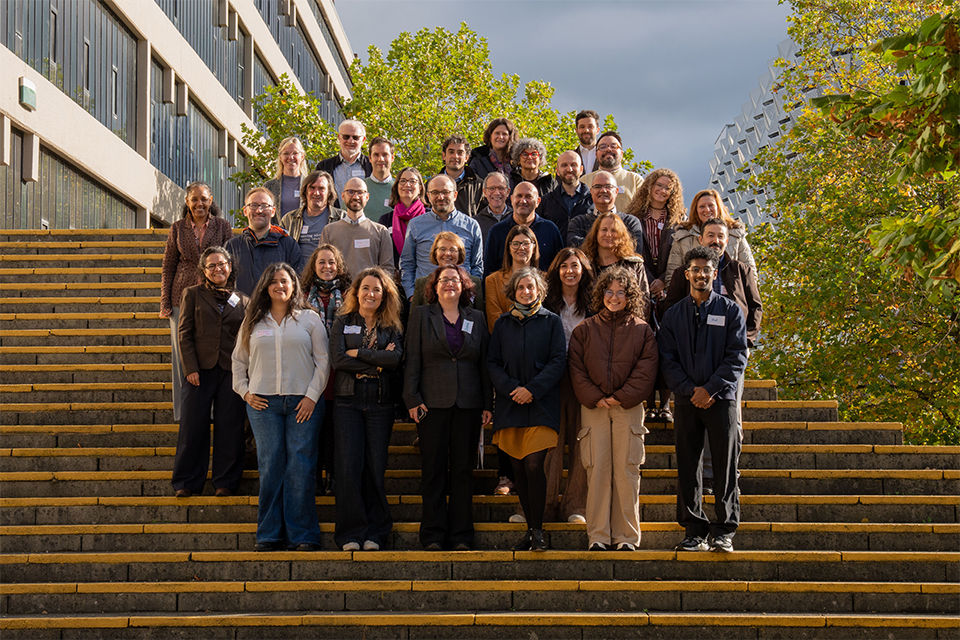
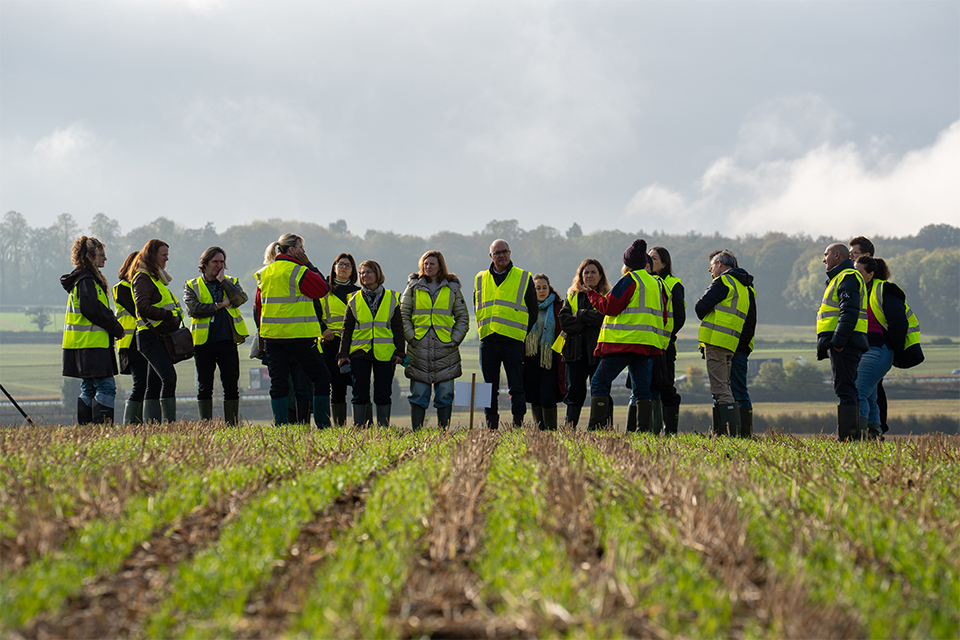
To mark the start of the project, the PROFEED consortium met in Leeds, UK, on 22 and 23 October 2026. Hosted by the University of Leeds, the two-day meeting brought together the 15 project partners to kick off the project, discuss the work ahead and agree on the next steps for the coming four years.
Innovation Across the Value Chain
Almost 96% of the high-protein feed used in Europe is imported, which makes local farming vulnerable to supply chain issues, fluctuating prices and environmental pressure. By increasing domestic production, we can reduce this dependency and promote stronger rural economies and more sustainable farming practices.
PROFEED will address this challenge across the entire value chain, from crop production to feed formulation and policy uptake. The project will work with 40 farmers, 10 Lighthouse Sites and 4 Communities of Practice across diverse European farming environments to identify the key challenges and test and validate solutions for expanding sustainable protein crop value chains for feed across Europe. More than 130 soybean, lupin and alfalfa accessions will first be screened under controlled conditions, including current and future climate scenarios, to identify the most promising and resilient varieties. These will then be tested under real farming conditions across different European climatic regions, while animal trials will assess their potential for use in feed formulations for pigs, poultry and aquaculture species. Environmental and socio-economic impacts will then be assessed through life cycle and techno-economic analyses.
From research to practical solutions to empower farmers
PROFEED will also deliver an open-access Digital Platform to centralise data, tools, training resources and best practices on the sustainable production and use of protein crops for animal feed. The project will develop a harmonised European database, policy recommendations and a multilingual Massive Open Online Course (MOOC) to support farmers, advisors, industry and policymakers.
“PROFEED aims to turn protein diversification into an opportunity to strengthen the resilience, competitiveness and sustainability of Europe’s feed systems,” says Associate Professor Christine Bosch, PROFEED Coordinator.
Supporting Europe’s climate and sustainability ambitions
Increasing the production and use of European plant proteins can deliver benefits beyond reducing import dependency. In particular, nitrogen-fixing leguminous crops can improve soil health, reduce the need for synthetic fertilisers and enhance biodiversity, while contributing to more resilient farming systems. Developing local protein value chains can also support rural areas by creating new regional economic opportunities and reducing the environmental impacts associated with imported feed production.
PROFEED will contribute directly to EU ambitions for greater strategic autonomy, food and nutrition security and sustainable agriculture. Its work supports the objectives of the Common Agricultural Policy (CAP), the European Green Deal, the Farm to Fork Strategy, EU climate action and the EU’s ambition to boost plant protein production and use for feed. By strengthening farmers’ capacity, improving knowledge among farmers and supporting innovation across the protein crop value chain, the project will help make European agricultural systems more competitive and resilient to climate change, external shocks and supply-chain disruptions, while supporting biodiversity preservation.
A Pan-European partnership
Coordinated by the University of Leeds, PROFEED brings together 15 partners from 8 countries, including Universidad de Murcia, The James Hutton Institute, Biopower Technologies Limited, Horizon Europe Leading Projects SL, IDENER Research & Development AIE, Universidade Católica Portugesa, Celabor SCRL, Technische Hochschule Nürnberg Georg Simon Ohm, EUFARMS—Réseau Européen des Fermes Agroécologiques / European Network of Regenerative Organic Farms, CER Groupe, CRA-W—Centre Wallon de Recherches Agronomiques, IMIDA— Instituto Murciano de Investigación y Desarrollo Agrario y Medioambiental, Centro Ricerche Produzioni Animali Soc. Cons. p.A., and NOFIMA AS—The Norwegian Institute of Food, Fisheries and Aquaculture Research.
Project details
- Project number: 101286912
- Project name: Progressive Solutions for European Feed Autonomy through Sustainable Plant Protein Value Chains
- Project acronym: ProFEED
- Call: HORIZON-CL6-2025-02
- Topic: HORIZON-CL6-2025-02-FARM2FORK-04
- Type of action: HORIZON Research and Innovation Actions
- Granting authority: European Research Executive Agency
- Project starting date: 1 October 2026
- Project end date: 30 September 2030
- Project duration: 48 months
- EU contribution: € 5 499 839,69
Consortium