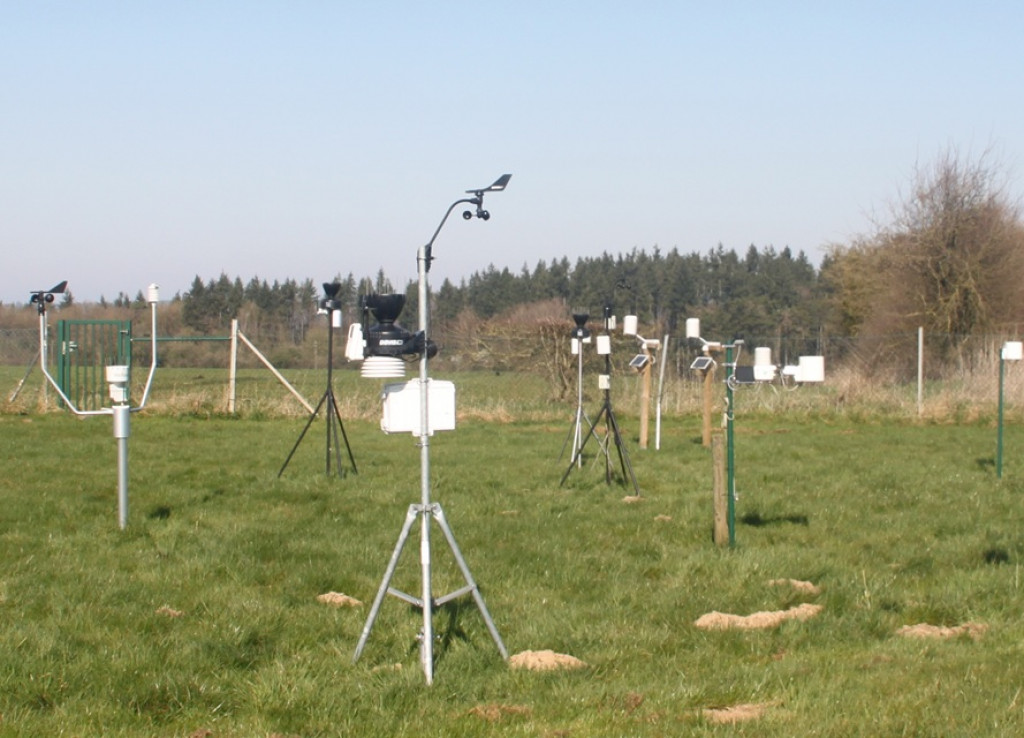
Against a backdrop of climate change and challenges related to soil water resource management, the Pameseb network is stepping up its environmental monitoring by installing Acclima TDR-315N sensors, which are capable of measuring soil temperature and volumetric water content.
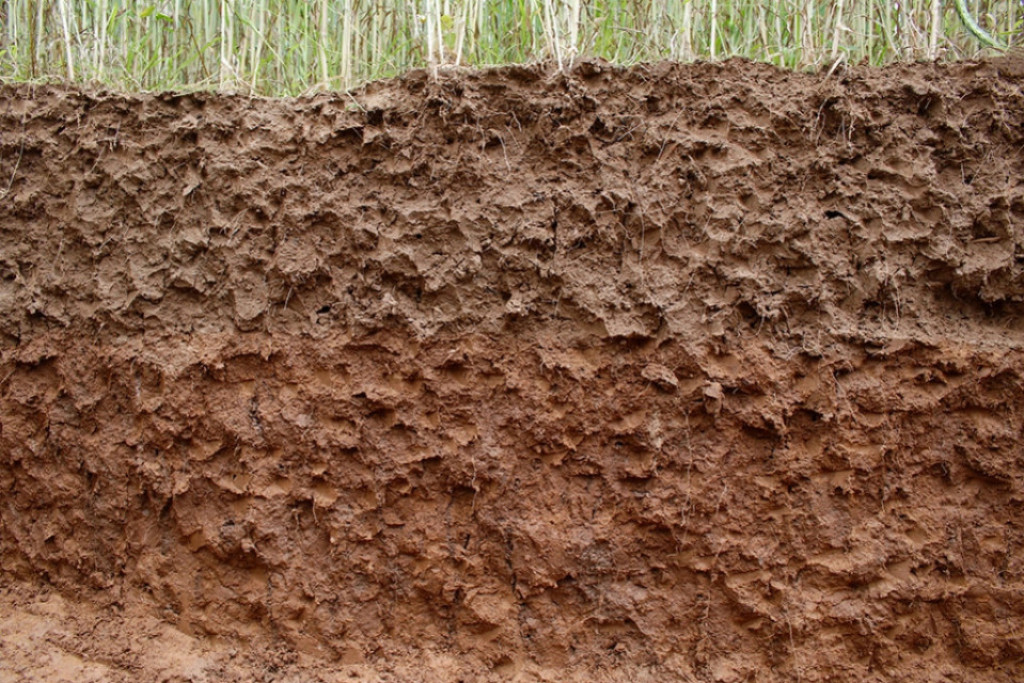
These sensors were installed under low herbaceous vegetation at the locations of the Pameseb network stations. At each site, a soil pit was dug, and probes were inserted into the soil at depths of 5, 10, 20, and 50 cm. They were inserted laterally from the pit to avoid disturbing the soil structure above the probes and causing preferential flow that would distort the measurements. The pit also made it possible to analyse the soil profile and collect samples to characterise its texture and water content, and to establish its water retention curve, which links the measured water content to the amount of water available for plants.
This procedure was repeated at 10 sites, selected not only for their locations throughout Wallonia but also for their diverse environments. The sites at Libramont, Lontzen, Ferrières, and Michamps were located in the middle of grasslands; the sites at Bertrix and Anlier were in clearings in the woods; and the sites at Gembloux, Waremme, and Upigny were located among crops. The Ragnies site, meanwhile, was located in the middle of a golf course, and these new in-ground sensors will directly support the management of the course.
These measurements are already being stored in real time on the Agromet.be platform but are not yet available to the general public. The data is currently being analysed and assimilated prior to the launch. If you would like to access this data for testing purposes, please feel free to contact the Agromet team at the CRA-W.
Caption: Moisture probes inserted into the soil from the soil pit
Funding: Project subsidised by the European Space Agency (ESA).