Diversify, yes… but under what conditions?
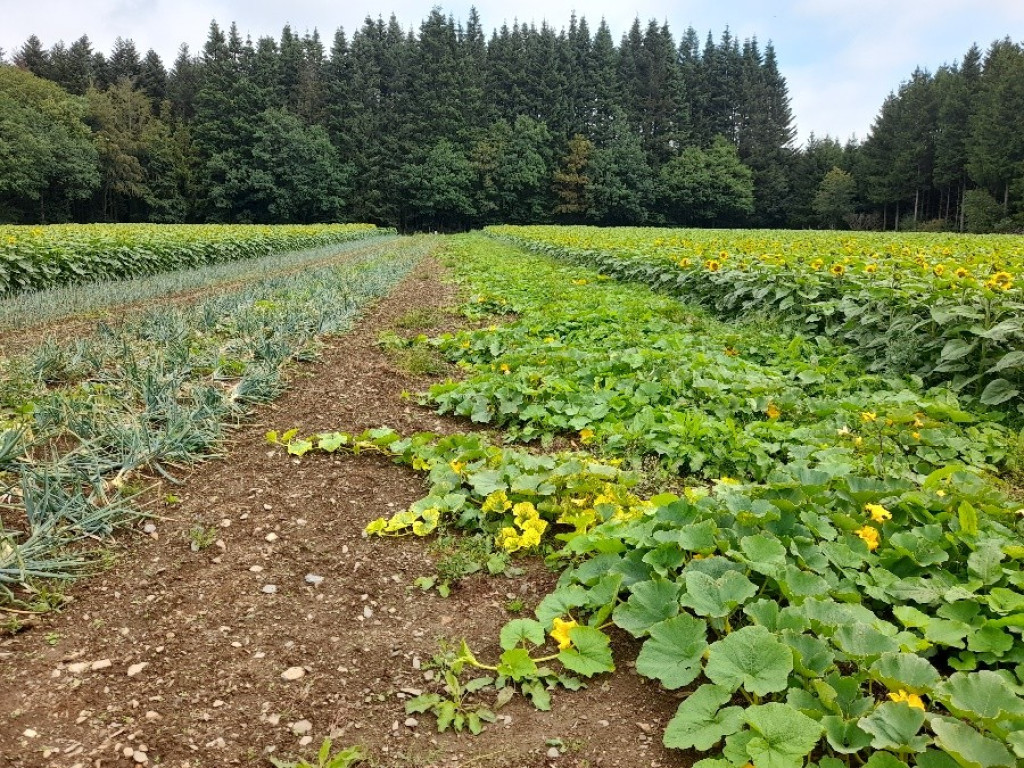
Extending crop rotations, introducing legumes, or planting hedgerows… On paper, there is a consensus on these approaches within agroecology. On the ground, however, they raise some very practical issues: uncertain yields, weed pressure, increased workloads, and the need to secure opportunities.
The CRA-W's SPoT project thus demonstrates that the transition is not solely a matter of technical choices. It also addresses work practices, the criteria for "good work", and decisions made as a team within the experimental units.
A "clean" field — but at what cost?
Weed management is a good example of this. For some people, a "clean" field remains a sign of professional integrity. For others, the key issue lies elsewhere: As long as the system remains productive and sustainable, a certain degree of plant diversity may be acceptable. Behind this agronomic debate, therefore, lies a genuine difference in how the profession is viewed.
Discuss rather than impose
The same is true for agroforestry. Planting hedges or trees is not simply a question of their ecological benefits. It is also necessary to take into account the plot layout, equipment, labour hours, and acceptance by the teams within the experimental units.
In this context, the role of the researcher is changing. It is no longer simply a matter of proposing ideal solutions, but of opening up the discussion, fostering dialogue between different points of view, and reaching workable compromises. This is about agronomy that bridges the gap between knowledge, on-the-ground constraints, and scientific requirements… in short, a diplomatic approach to agronomy.
Caption: Crop diversification presents both technical and human challenges in the field.
Funding: Project subsidised by the CRA-W's Bio grant