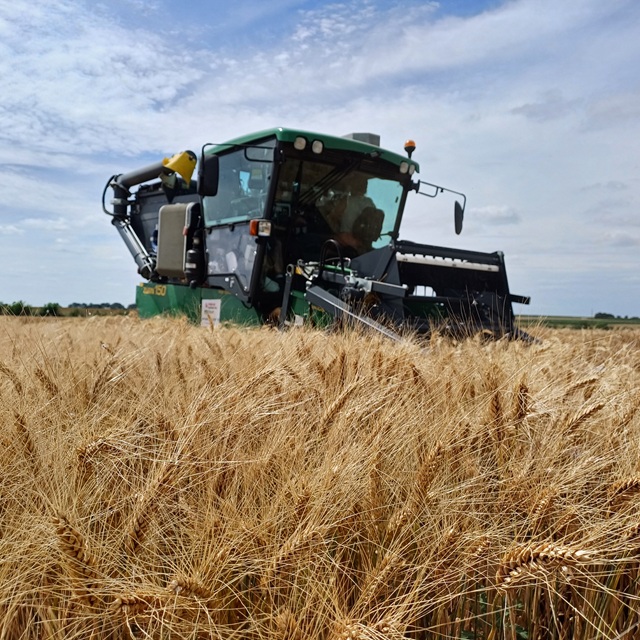
The Blé dur (Durum wheat) project, coordinated by the CRA-W, is nearing completion. A look back at this project, which helped strengthen expertise in this crop across our region.
Durum wheat is a species closely related to common wheat; it is distinguished by the internal structure of its grain, which is vitreous and brittle. These unique properties mean this cereal is used exclusively for human consumption. After harvest, the grain is ground to produce semolina. It is then used as the main ingredient in the production of pasta, couscous, and bulgur.
On our continent, the current production areas are located around the Mediterranean, because durum wheat does not tolerate the cold winters and wet summers of northern Europe very well. However, due to climate change and the development of varieties that are more tolerant of cold, it is becoming feasible to grow this grain in our region further north.
Convinced of this crop’s potential, the CRA-W launched a research project in 2023 in collaboration with several public and private partners, aimed at removing barriers to the adoption of this crop and supporting the development of a local supply chain.
The work carried out as part of this project has shown that, by selecting suitable varieties, it is entirely possible to grow durum wheat in Wallonia that meets the various quality criteria set by the food processing industry. Although its yield potential is slightly lower than that of forage wheat, incorporating this cereal into our farms' crop rotations can be seen as an opportunity for diversification and a strategy for adapting to climate change.
This project lays the foundations for a future durum wheat production sector in Wallonia. Nevertheless, its long-term viability will depend on the establishment of production contracts and the existence of a market capable of absorbing and adding value to regional production.
Funding:
Walloon Recovery Plan,