Context
Despite significant regulatory developments, the use of insects in livestock feed remains limited. One of the main barriers is the higher production cost compared with other protein sources, particularly due to restrictions on the range of authorized substrates. As a result, European insect-production companies continue to face substantial economic challenges.
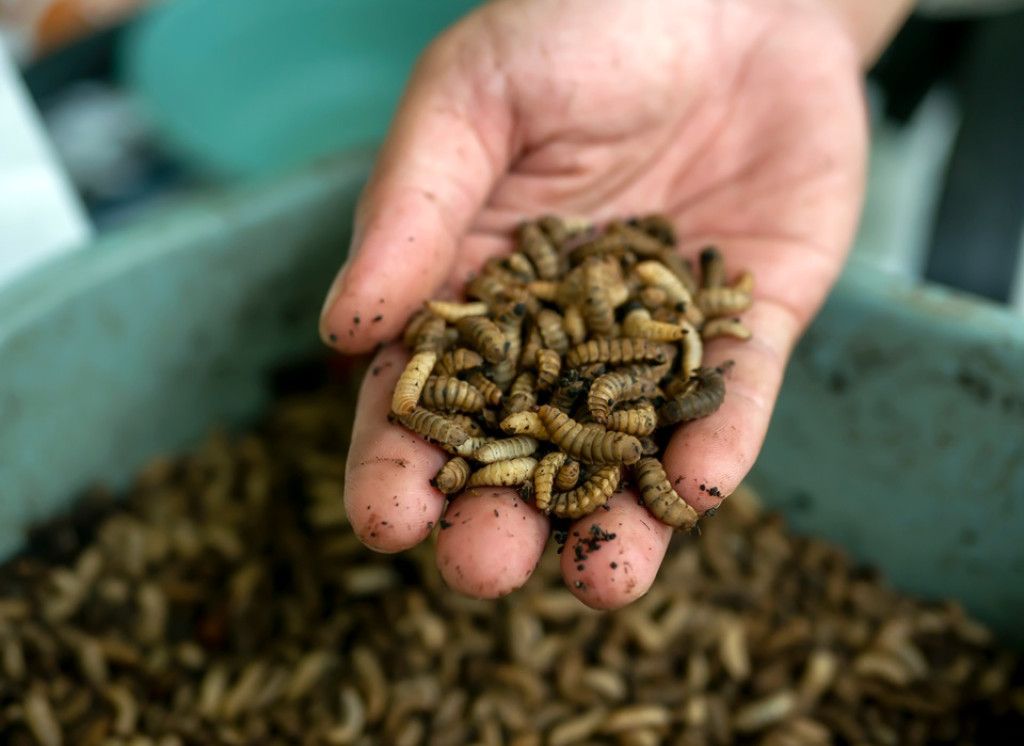
Certain insect species naturally colonize a variety of organic residues, including livestock-derived materials such as meat by-products, animal effluents, manure, and slurry. Several studies have proposed the entotechnological valorization of these residues using black soldier fly (BSF) larvae. Such an approach could provide an alternative waste-management strategy by converting these materials into valuable nutritional resources within a circular economy framework. However, these practices remain prohibited in Europe, where animal by-products cannot be used as substrates for the production of edible insects. These restrictions are primarily driven by sanitary concerns, particularly the potential persistence of substrate-derived residues in the final insect products.
Outside Europe, where regulations are generally more permissive, insects reared on such substrates may nevertheless enter international markets. European producers may also be tempted to use these lower-cost substrates. Yet, no analytical method currently exists to verify the type of substrate on which insects have been reared, making potential fraud extremely difficult to detect. This risk is particularly significant for imported insect meals originating from third countries, where regulatory standards and control measures may be less stringent.
The InSpectrum project proposes a comprehensive analytical strategy to detect the use of prohibited substrates in insect production. Unlike indirect approaches that are limited to pathogen detection, the project will develop direct analytical methods aimed at identifying substrate-derived residues in insect products. The project will focus on high-risk, high-value substrates, including Category 2 animal by-products (manure, slurry, slaughterhouse sludge, and livestock residues), using black soldier fly (BSF) larvae as a model organism.
Objectives
The objectives of the proposal are:
1. To develop analytical methods to verify on which type(s) of substrates the insects have been raised by:
- Evaluating official methods (light microscopy and PCR) for the detection of animal proteins.
- ·Developing complementary approaches using proteomic analysis techniques by mass spectrometry (MS-proteo) and near-infrared microscopy (NIRM).
2. To assess the impact of primary and secondary breeding and processing techniques applied to obtain insect coproducts on the detectability of the developed markers. For this, the project encompasses the production stages of insects at various breeding sites and on different substrates.
3. To define the limitations of the approaches and how to address them.
4. To establish an analytical framework using a multidisciplinary approach to ensure compliance with current regulations.
5. To conduct monitoring involving the collection and analysis of products available on the Belgian and international markets (EU and third countries).
Work packages
WP1 : Rearing Substrate Preparation
Various livestock by-products, mainly Category 2 materials (livestock residues and effluents), were selected based on their low cost, local availability, production volumes, potential suitability for insect rearing, and nutritional characteristics.
WP2 : Production of Entomological Samples
Larvae will be reared at two production sites, one in Belgium and the other in Quebec (Canada). The Belgian production site will focus on dairy cattle slurry, finishing pig slurry and marine fish by-products. The Quebec production site will focus on hatchery residues, poultry manure, poultry slaughterhouse sludge and aquaculture by-products
WP3 : Development of Analytical Methods
The different insect meals will be analyzed using light microscopy and PCR, following Annex VI of Regulation (EC) No 152/2009 for the detection of animal proteins in feed, as well as the Standard Operating Procedures (SOPs) published by the EURL-AP for the implementation of these techniques.
In parallel, proteomics-based mass spectrometry (MS-proteo) and near-infrared microscopy (NIRM) approaches will be developed. These methods will be designed for use both as stand-alone analytical tools and as complementary approaches to official methods, addressing any limitations identified during the project.
WP4 : Establishment of an Analytical Testing Scheme
Based on the developments achieved in WP3 and the results obtained from the various insect meals produced during the project, the different analytical approaches will be combined to establish an integrated testing framework. This framework will provide guidelines and recommendations for competent control authorities to support the detection of prohibited substrates in insect-derived products.
WP5 : Monitoring of Insect Products Available on Current Markets
This monitoring activity aims to provide an objective overview of insect-derived products currently available on both the Belgian and international markets, including products originating from the European Union as well as imports from third countries.
CRA-W involvement
CRA-W is the coordinator of the InSpectrum project and is actively involved in WP 3, 4, and 5.
Consortium partners
- Université de Namur – Plateforme de spectrométrie de masse (MaSUN), Namur, Belgium
- Haute Ecole Province en Hainaut (HEPH-Condorcet), Ath, Belgium
- Université Laval (ULaval), Québec, Canada
Funding
SPF Santé publique, Sécurité de la Chaîne alimentaire et Environnement
Team