Eight different parties involved in research have joined forces to develop the skills and tools needed to set up plant and alternative protein chains in Wallonia.
As part of the Wal’Prot project, the CRA-W has established processes for sorting protein-rich crop yields, developed analytical solutions to enhance the value of these crops, and conducted environmental and socio-economic life cycle assessments (LCAs) of the supply chains.
Context
The situation is not new: Wallonia—and Europe more broadly—remains heavily dependent on imports to meet its total demand for plant-based proteins. In this context, the WAL’PROT project portfolio was launched to encourage the research community to develop local, innovative, and sustainable solutions for the region’s industrial sector.
Bringing together four universities (ULiège, UCLouvain, ULB, and UMons) and four research centres (CRA-W, CETIC, CER Groupe, and CELABOR), WAL’PROT aimed to strengthen Wallonia’s scientific and technological capabilities in the field of alternative proteins. The project supports the development of plant-based protein supply chains—primarily for human consumption—while also exploring additional applications in animal feed and biomaterials. A wide range of approaches was investigated, covering the entire alternative protein value chain: from the production of raw materials (such as dedicated or intercropped plants, algae, etc.) to the development of new ingredients and analytical methods, as well as the valorization of non-protein fractions and the digitalization of processing methods.
Objectives
The main objectives of the CRA-W in this project were to:
• Assemble and manage a collection of samples representative of protein-rich crops produced in Wallonia.
• Develop and optimize physical and optical sorting solutions to improve the technological and sanitary quality of the raw materials.
• Evaluate the potential use of the fractions obtained from sorting, particularly in animal feed.
• Develop rapid characterization methods using near-infrared spectroscopy and hyperspectral imaging.
• Generate reference analytical databases required for the development and validation of prediction models.
• Conduct environmental, socio-economic, and supply-chain analyses to identify the barriers to and drivers for the development of plant-based proteins in Wallonia.
Implementation and results obtained
Task 1 – Collection and sorting of samples of interest
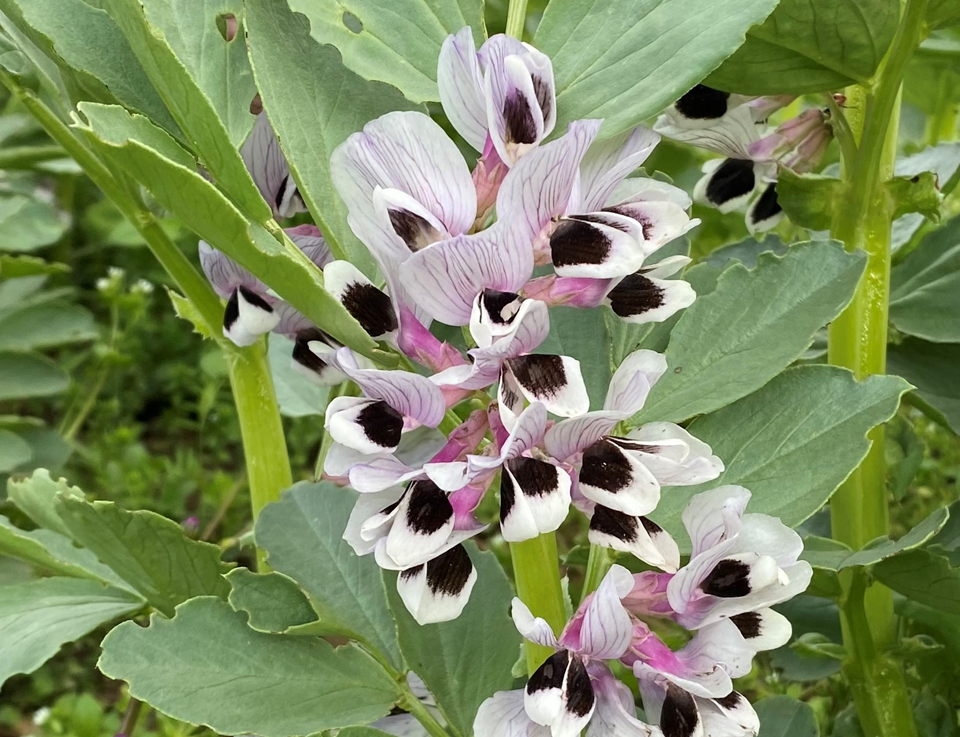
CRA-W has assembled a collection of over 1,000 samples of protein-rich crops from the 2023–2026 harvests (including peas, fava beans, lupins, lentils, soybeans, chickpeas, and Narbon vetch) and has supplied these raw materials to the project partners.
The sorting process combined mechanical and optical approaches. Physical sorting enabled the efficient separation of intercropped lentils/cereals and peas/fava beans, achieving high levels of purity and demonstrating the feasibility of post-harvest sorting for such crops.
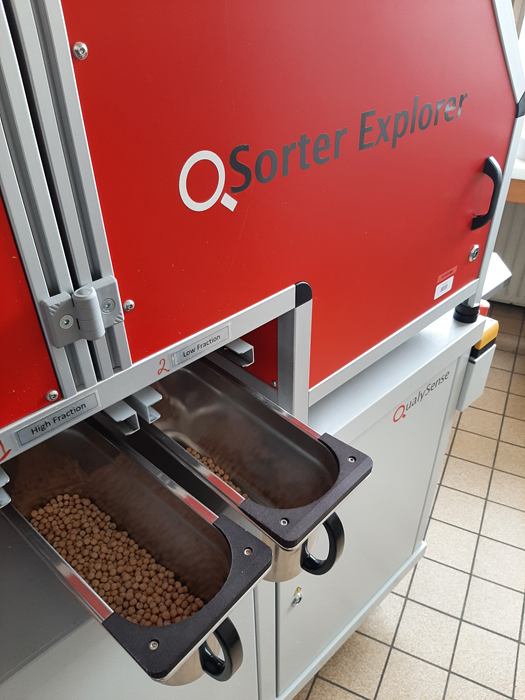
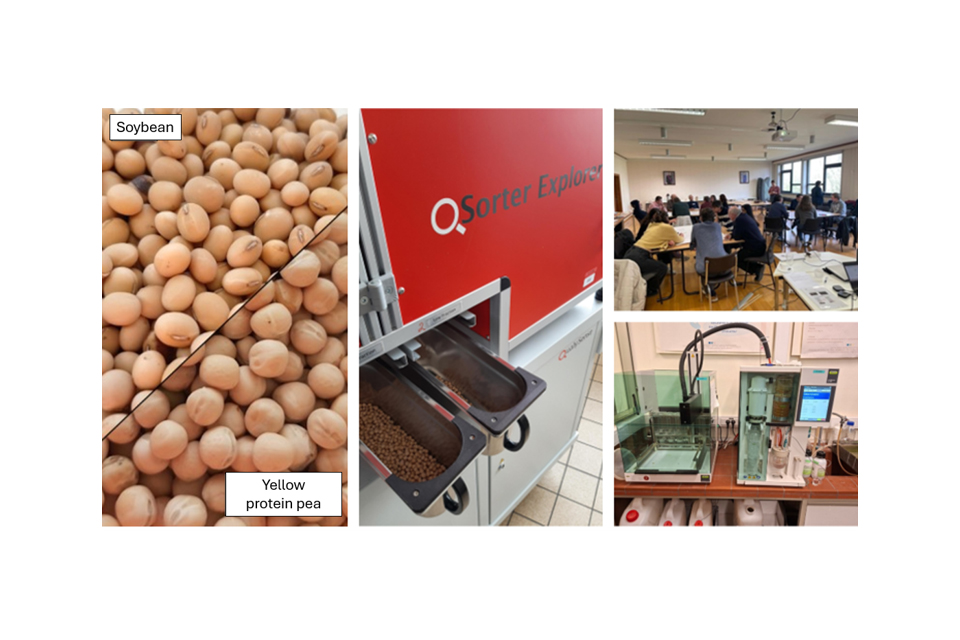
In parallel, the QSorter Explorer 2.0—a near-infrared (NIR) optical sorter—was used to develop several innovative applications:
• segmenting batches of peas based on various compositional criteria (protein, moisture, cellulose, fat, and starch content) to direct raw materials toward their most suitable end-uses;
• detecting and removing soybeans from batches of peas, thereby helping to manage allergen risks;
• identifying and sorting soybeans contaminated by mycotoxin-producing fungi, which significantly reduces contamination in the retained fractions while limiting waste to approximately 10% of the initial mass.
These results confirm the potential of mechanical and optical sorting technologies to enhance the technological, sanitary, and functional quality of protein-rich crops.
Task 2 – Valorization of fractions
The work in this task focused on improving the valorization of downgraded fractions.
For durum wheat, an NIR (near-infrared) optical sorting model was updated to distinguish between vitreous grains and "mitadin" (partially starchy/opaque) grains. The results confirm that it is possible to preserve vitreous grains for human consumption while directing the downgraded, "mitadin" fractions toward animal feed.
Regarding fava beans, an analytical method for quantifying vicine and convicine—both of which are anti-nutritional factors—was developed and applied to various varieties.
Task 3 – Characterization of samples using reference methods
Several hundred samples were analyzed using reference methods. The parameters studied include protein content, as well as dry matter, starch, ash, fat, cellulose, fibers (NDF, ADF, ADL), and levels of vicine/convicine.
These data provide an essential reference base for the calibration and validation of NIRS (near-infrared spectroscopy) models.
Task 4 – Characterization of samples using near-infrared spectroscopy (NIRS)
All samples were characterized using NIRS to populate CRA-W databases and improve existing prediction models. A prediction model for the protein content of peas was also developed for use with a portable spectrometer, demonstrating the potential for conducting analyses directly in the field.
Furthermore, a hyperspectral imaging method was developed to automatically detect various impurities in batches of fava beans. The resulting models show high performance, confirming their value for automated quality control.
Task 5 – Life cycle assessments (LCA) and socio-economic study
CRA-W conducted an analysis of the plant-based and alternative protein sector in Wallonia, drawing on 25 interviews that covered the entire value chain. This study identified key stakeholders, mapped the barriers to and drivers of the sector’s development, and produced a widely disseminated reference report. The findings highlight a "trilemma" consisting of low production volumes, a lack of suitable infrastructure, and limited demand. They also point to several levers for action, including research and innovation, contractualisation, public support, and consumer awareness-raising.
In parallel, environmental LCAs were carried out for pea and fava bean crops, as well as for the production of pea protein concentrates. The results show that, while the environmental impacts of protein crops are comparable to those of wheat when measured per kilogram of fresh produce, they are lower when calculated on a per-hectare basis. This work provides objective data to guide the sustainable development of the sector in Wallonia.
Partnership

Funding
The European Regional Development Fund (ERDF programming 2021–2027) and Wallonia.