A sensor capable of detecting spores in real time would provide information to advisors and growers more quickly, thereby enabling more responsive measures against scab.
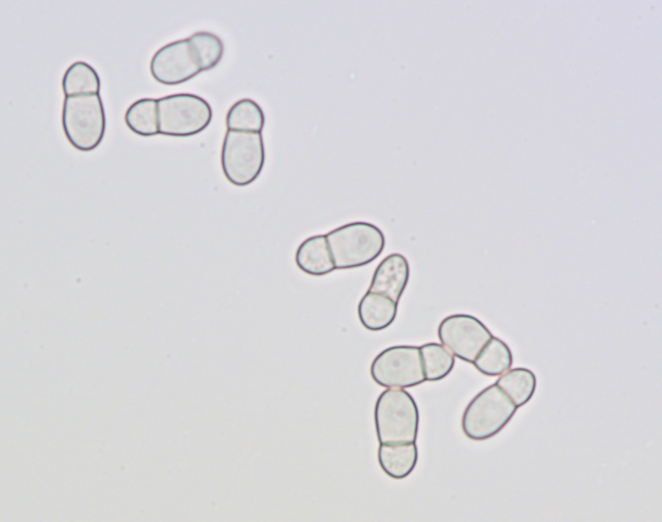
Apple scab (Venturia inaequalis) is the primary disease affecting apple trees in our region. If its spores could be better identified, growers could take action faster and help limit the need for treatment.
As part of the Interreg Trans-e-Bio project, the CRA-W and its partners are developing a low-cost, real-time spore sensor prototype. Today, spore dispersal is already being monitored, but this process relies on time-consuming and tedious manual counts. Automating this step would save researchers a considerable amount of time while providing information that can be used immediately.
The stakes are high for apple growers. With data being transmitted to advisors more quickly, alerts could be issued sooner. This responsiveness is essential in integrated management and biocontrol strategies, where the window of opportunity for intervention after the onset of an infection is often very small.
To make this automatic detection possible, hundreds of images of spores are collected to train artificial intelligence-based recognition software. At the same time, the project partners are making progress on developing the prototype. An initial laboratory test is planned for the coming months, before making any possible adjustments for direct use in the field.
The CRA-W is also studying the number of spores required for symptoms to appear on different apple tree varieties, which exhibit varying levels of susceptibility to scab. In collaboration with the Interreg Trans-Control project, researchers are also evaluating the effect of lipopeptides, natural molecules produced by bacteria of the genus Bacillus. These substances, which have antifungal properties, offer a promising avenue for developing alternatives to certain protective products whose use is controversial, such as copper, for example.
Funding :