Neurotransmitters play a central role in regulating many biological functions, from digestion to behaviour. While they are widely studied in humans and pets, investigations into their functions in farm animals are only just beginning.
In 2025, the CRA-W began work to identify these new potential animal welfare markers directly in animal faeces, and to develop suitable assay techniques.
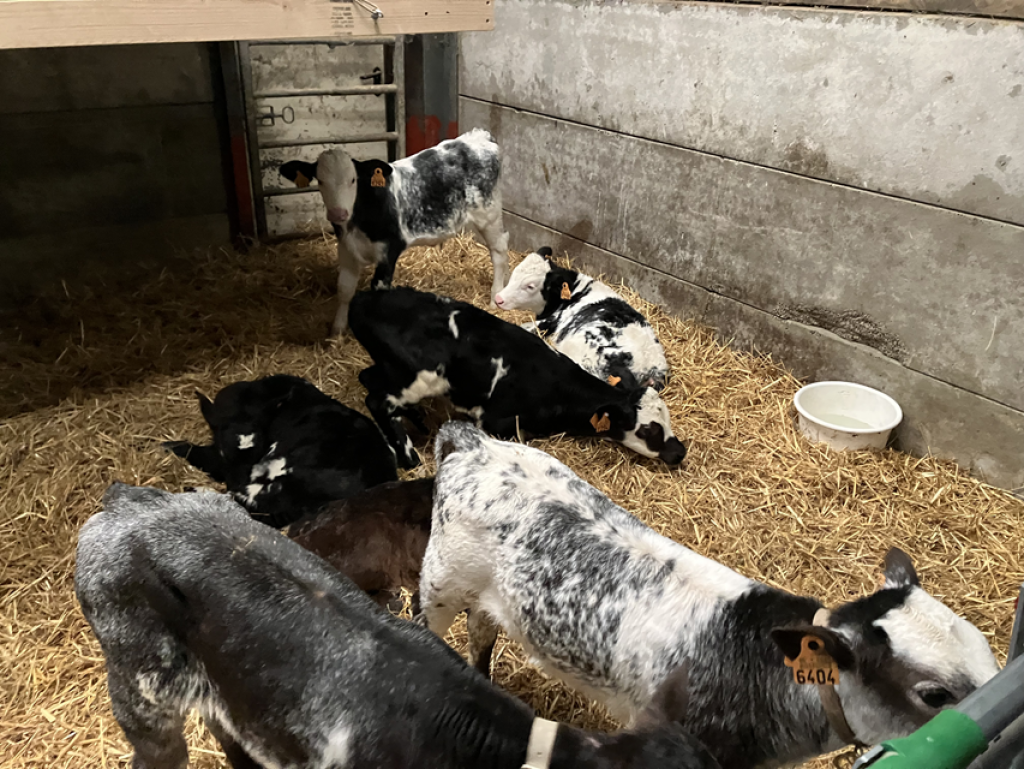
A pilot study was carried out in calves, which targeted two neurotransmitters: dopamine and serotonin. A group of seven calves was successively monitored living in a cowshed and then on grassland, in order to assess the impact of the environment on faecal metabolites. The results show an increase in dopamine concentration in samples taken when the animals were on grassland. This suggests that this environment has a favourable effect on the calves, which could be confirmed by behavioural observations carried out by the University of Namur, connected to the work carried out.
Intestinal dopamine is known to be involved in digestive motility, secretion regulation and local immune interactions. In young animals, variations in this neurotransmitter could also influence appetite and the ability to cope with stress, essential parameters for growth and robustness.
Prospects for livestock farming and animal welfare
In the short term, this work paves the way for the development of objective, non-invasive biological markers of farm animal welfare. For the agricultural sector, they offer concrete prospects for better assessing the impact of breeding practices and environmental conditions on animal health and welfare.
Funding: Walloon Region

Team