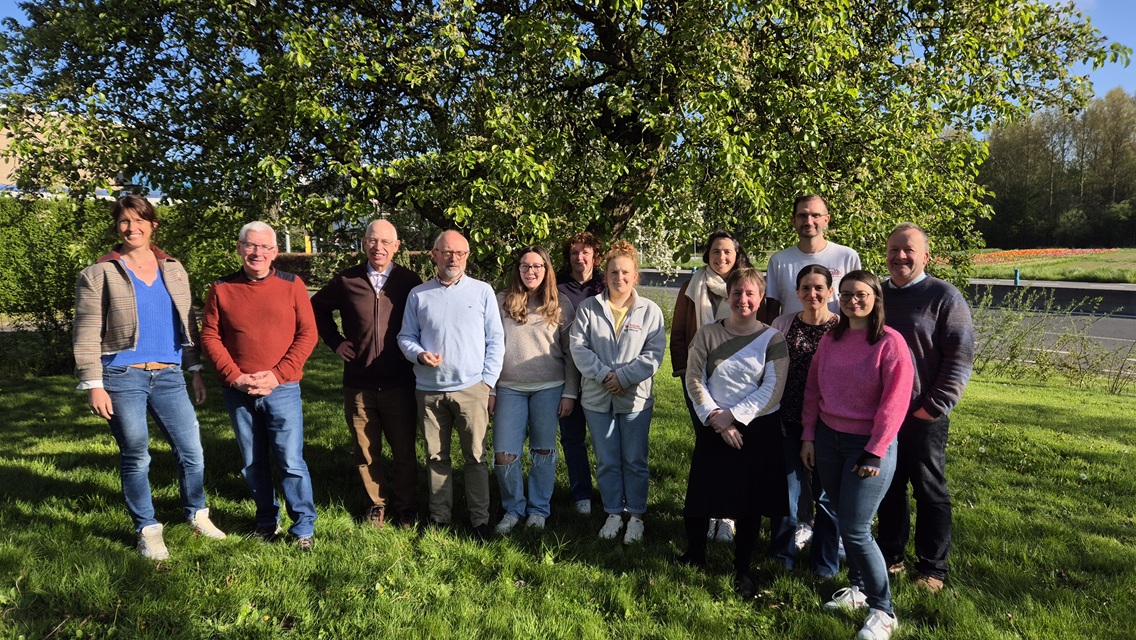


The European Union Reference Laboratory for Animal Proteins in feedingstuffs (EURL-AP) celebrates its 20th anniversary this year.
For twenty years, the EURL-AP has played a central role in European food safety. Created to support the implementation of the feed ban in the wake of the mad cow crisis in the 1990s, the laboratory, hosted by the CRA-W, has established itself as an essential scientific reference for the detection of animal proteins in animal feed.
The EURL-AP plays a central role in ensuring compliance with livestock feed regulations
In practice, the EURL-AP supports the European Commission and Member States by using its independent and reliable scientific expertise to develop or improve analytical methods capable of detecting the presence of animal proteins, sometimes in trace amounts, in animal feed. Over the years, the laboratory has integrated new technology, combining microscopic observation, DNA analysis and now mass spectrometry, to make testing ever more precise and reliable.
But the EURL-AP is not just a laboratory, it's also a dynamic network of national reference laboratories established in every Member State of the European Union. Through the regular organisation of training sessions, the laboratory plays an active role in raising the skill levels of those involved in testing, and in standardising analytical practices on a European scale. Some of its most visible achievements include a vast image bank – the only one of its kind in the world – which helps experts identify the origin of animal particles observed in food.
Twenty years after it was established, the EURL-AP continues to evolve with the same scientific rigour to meet the new challenges of animal feed, in particular the emergence of new protein sources.