


Insights from the implementation of innovative solutions for optimising irrigation and soil fertility.
By 2025, fewer than one third of European farmers had integrated at least three digital tools dedicated to arable farming into their farms, such as digital field logs, satellite imagery or precision guidance. Some of these solutions, although promising, are still not widely used in Wallonia, mainly due to the obstacles to adoption as perceived by farmers.
The aim of the DuraTechFarm project was to integrate precision agriculture solutions on farms in order to identify these obstacles and help overcome them. Solutions tested included optimising how irrigation is distributed and triggered, and optimising the application of inputs (lime, organic matter). More information.
Special focus on precision irrigation
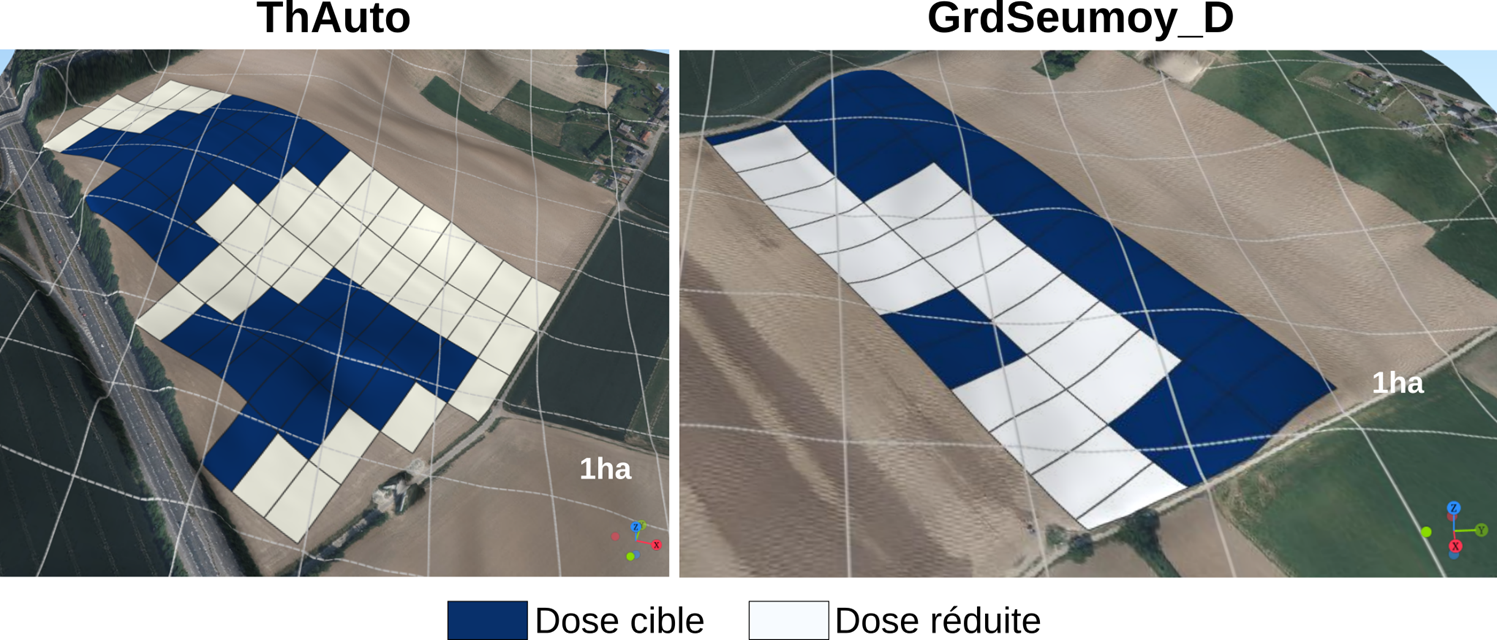
Irrigation equipment (boom, gun) can now be remotely controlled, with automatic regulation of sprinkler angle and forward speed. These functions allow for section control to irrigate complex-shaped fields while avoiding off-field areas and limiting overlap between passes. They also pave the way for variable-rate irrigation based on prescription maps.
Section control is simple to implement and can generate immediate benefits by reducing water volumes applied and increasing flexibility in equipment positioning. It represents a first step towards more precise irrigation.
Variable-rate irrigation offers the greatest water-saving potential. However, its implementation requires several technological components (mapping, agronomic interpretation, conversion and transfer of prescription maps). It therefore remains more complex to deploy and is currently reserved for farms with adequate resources and skills.