The 4th industrial revolution is underway! It reflects in a rapid evolution of our production and processing systems towards industry 4.0. This refers to a new generation of robotic and intelligent means of production. With the digital revolution, the boundaries between the physical and digital worlds are getting thinner, giving life to interconnected farms, production systems and 4.0 processing industries in which employees, machines and products interact. The 4th industrial revolution particularly involves the development of sensors and field analysers monitoring production and analysing products. Instead of bringing the sample to the laboratory, these new innovative tools are becoming essential tools for the on-site assurance of quality, safety and traceability of agricultural production and agri-food products.
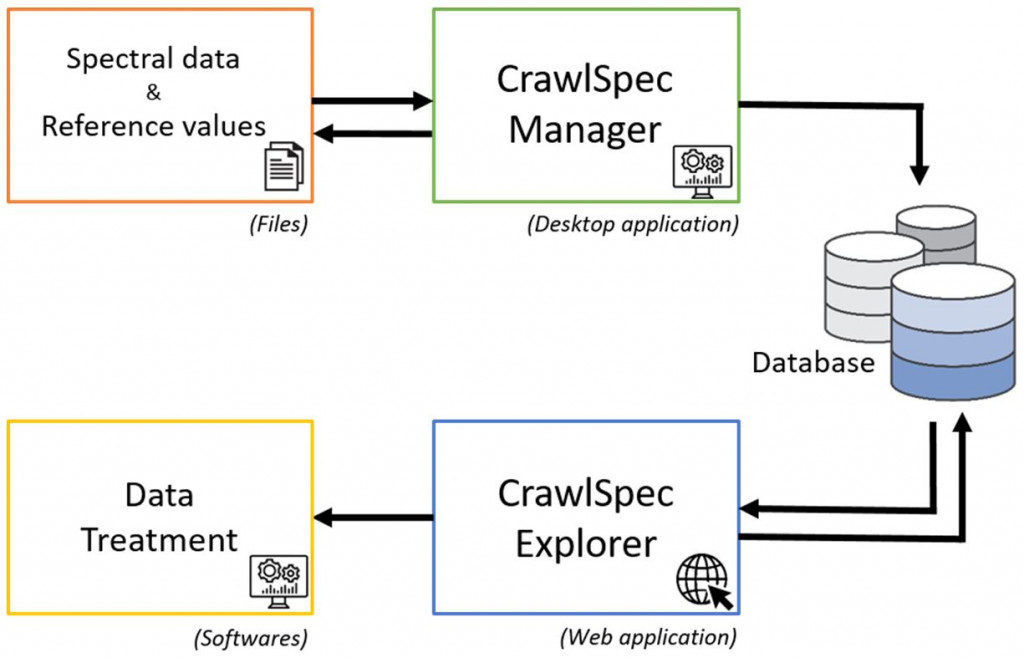
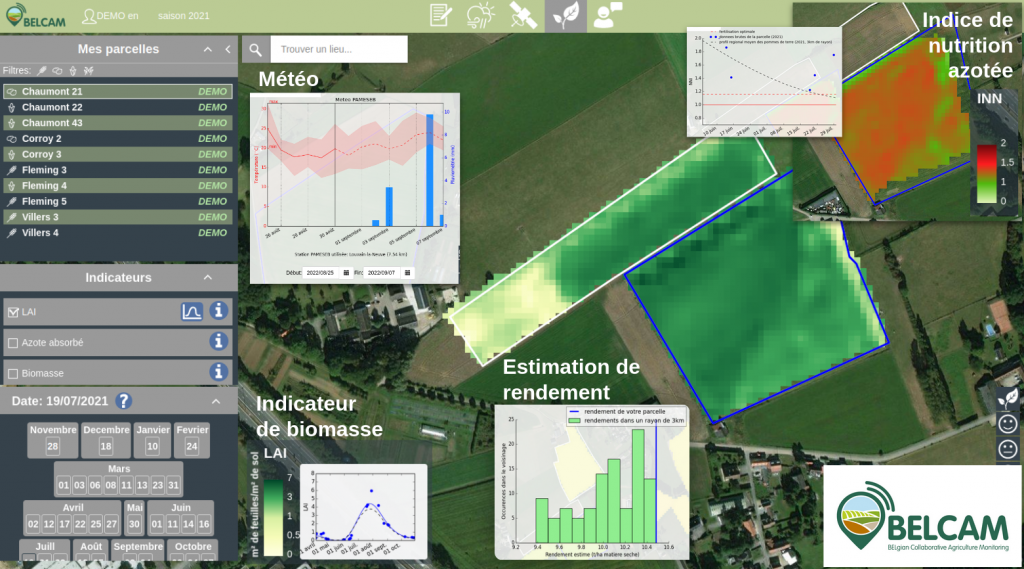
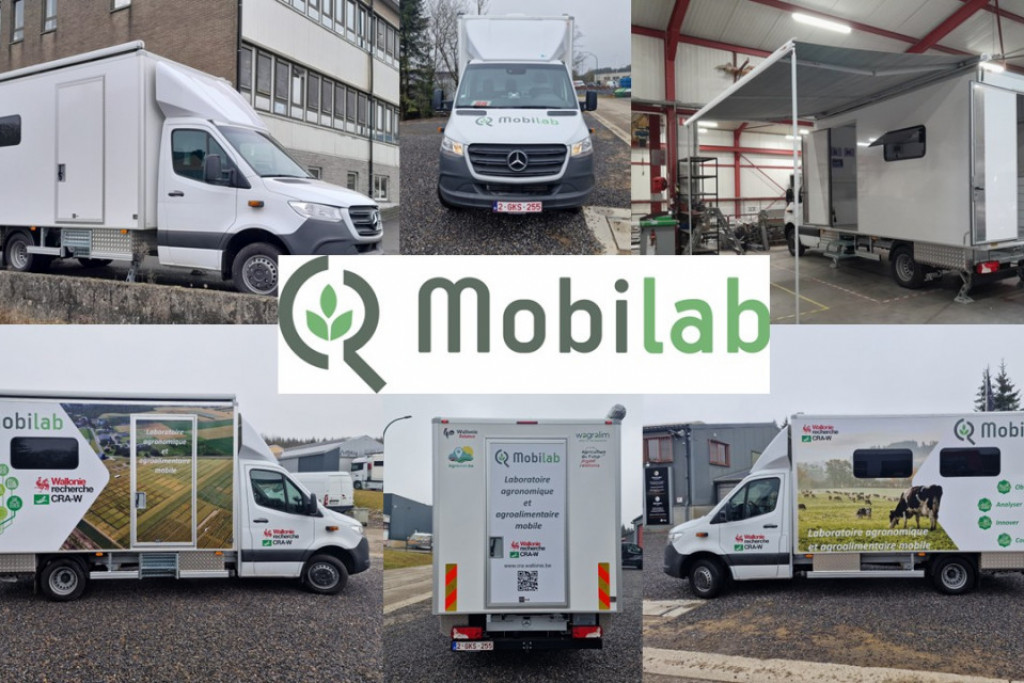
The MOBILAB project aims at designing and implementing a mobile laboratory by 2024 for applications demonstrations of innovative sensors and analysers in agriculture and food/feed industry. Therefore, many sensors and analysers will be proposed for the characterization of raw materials and products, the monitoring of processes and the detection of contaminants and stresses (biological, chemical and microbiological). They are notably based on techniques relating to electronic and vibrational spectroscopy, hyperspectral imaging, digital microscopy and nanopore sequencing in molecular biology. These new developments are inherent to the approach of bringing the laboratory into the field. An approach that proves to be particularly interesting in the contexts of products from local food networks, on-farm processing, small companies and an increasingly circular economy.
After an initial test phase within the CRA-W facilities (farms, orchards, fields, greenhouses, technology halls), this mobile laboratory will enable the demonstration of the possibilities offered by innovative sensors and analysers in support of stakeholders in agriculture and the agri-food sector.
The MOBILAB project should thus contribute to removing the existing obstacle in Wallonia regarding the acceptance and use of these new technologies by the agricultural community and the Walloon companies.
This project was carried out as part of the field laboratory's activities.
Mobilab was present
- On June 19th, 2025, at the Lonzée trials experimental site as part of CEPICOP's 20th anniversary celebration

- On July 3rd, 2025, at the Thisnes trials experimental site as part of the Interprofessional Organic Day

- On July 25th-28th, 2025, in Libramont as part of the Agricultural, Forestry, and Agri-Food Fair

- On September 16th, 2025, at the old Moulins de Beez as part of the ValCerWal symposium

- On September 25th, 2025, at the Château-Ferme de Profondval as part of the annual Food Connections – Wagralim event

- On November 25th, 2025, at CRA-W, as part of an internal digital technology day, Mobilab - Mobile Laboratory

- On January 14th, 2026, at CRA-W, at the VISSAC farm, as part of the BROMEDIR project meeting aimed at developing a miniaturized and portable FT-MIR spectrometer, dedicated in particular to the analysis of milk.

- On January 29th, 2026, at CRA-W, as part of the WAL’PROT project steering committee meeting, the various spectroscopy and near-infrared imaging applications developed within the project to ensure the quality of protein crop production will be presented to a few industry representatives and partners.

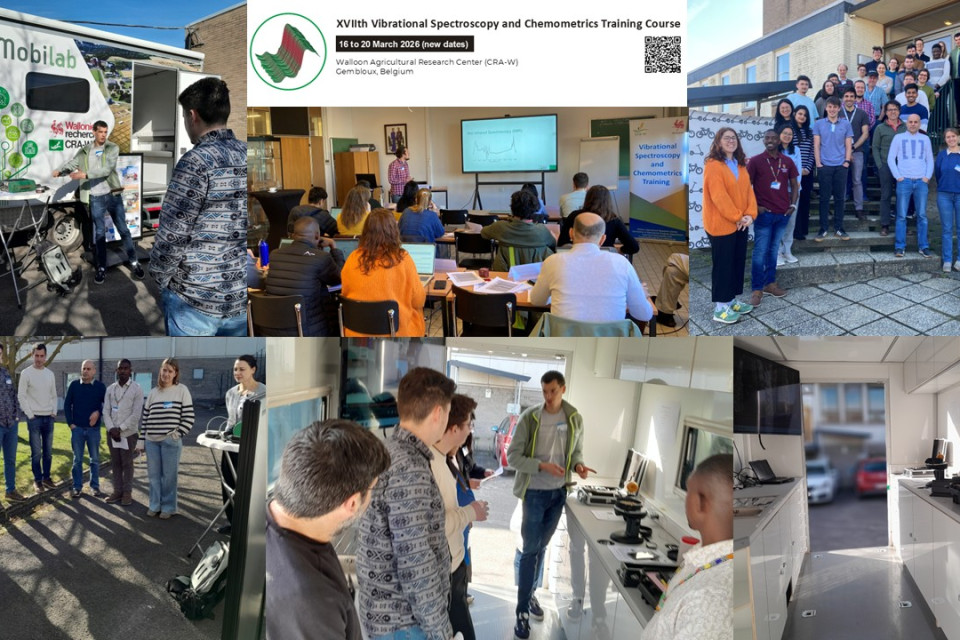
- On March 17th, 2026, at CRA-W as part of the 17th annual training in vibrational spectroscopy and chemometrics, to present to the 19 participants, the research activities implementing portable spectrometers for phenotyping and quality control of agricultural productions on site.
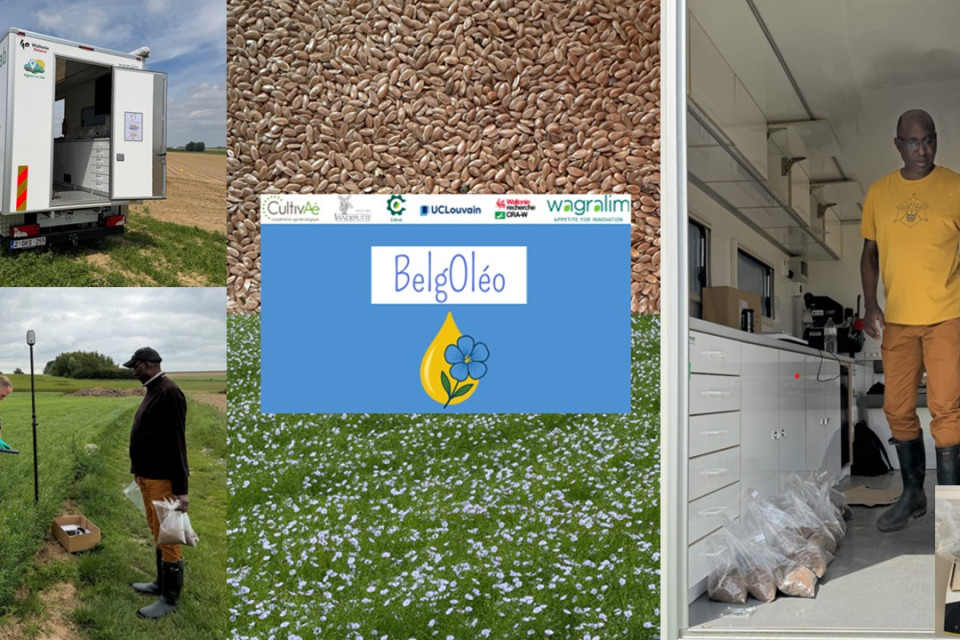
- On June 15th , 2026, on two plots of oilseed flax in the BelgOléo project, to collect soil samples in order to verify the absence of trace metal elements and to evaluate chemical and biological indicators by near-infrared spectroscopy.
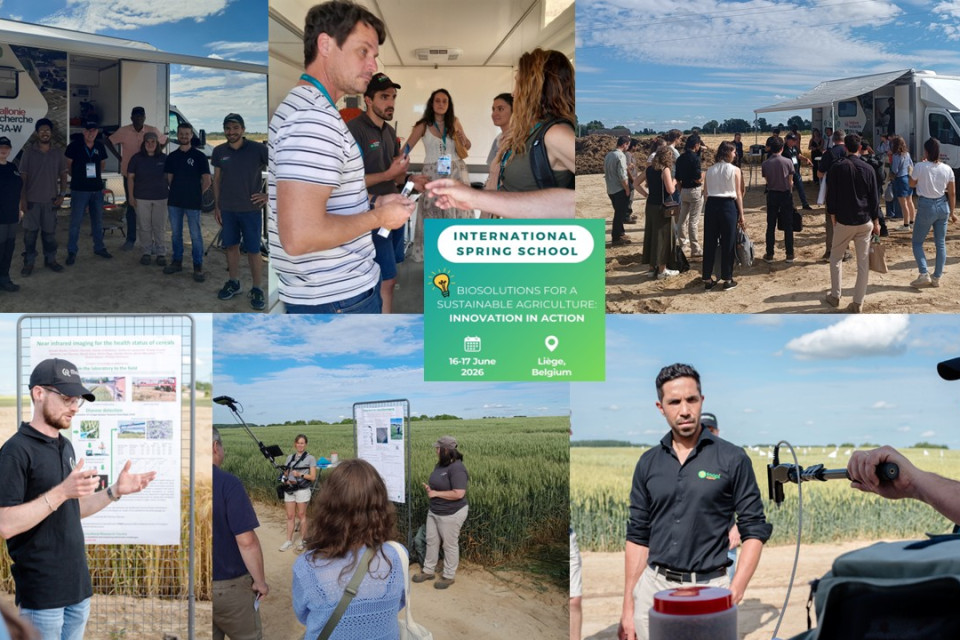
- On June 17th , 2026, at the CePiCOP asbl experimental platform in Lonzée, as part of the Spring School, co-organized by Wagralim and IIS DigiBioControl, to demonstrate spectroscopy- and imaging-based phenotyping tools in the visible and near-infrared ranges to assess biotic and abiotic stresses on crops.
- On September 9th and 10th , 2026, at UCL university sites—specifically the UCL farm and the Faculty of Agricultural Sciences (Place Croix du Sud)—in the framework of the Phenet project’s annual meeting and a stakeholder event, open to the public, aiming to showcase tools developed within the project, particularly those for phenotyping based on spectroscopy and imaging.

Funding
This project is funded by the Wallonia recovery plan. #WallonieRelance